Notebook Entry
Some comments on *The Imitation Game*
Again Saturday comes and I decided to settle down and write something stirred in me recently. Today’s theme is about the classical film The Imitation Game, which elaborates on the whole life of Alan Turing, one of the most famous celebrites in the history of computer science.
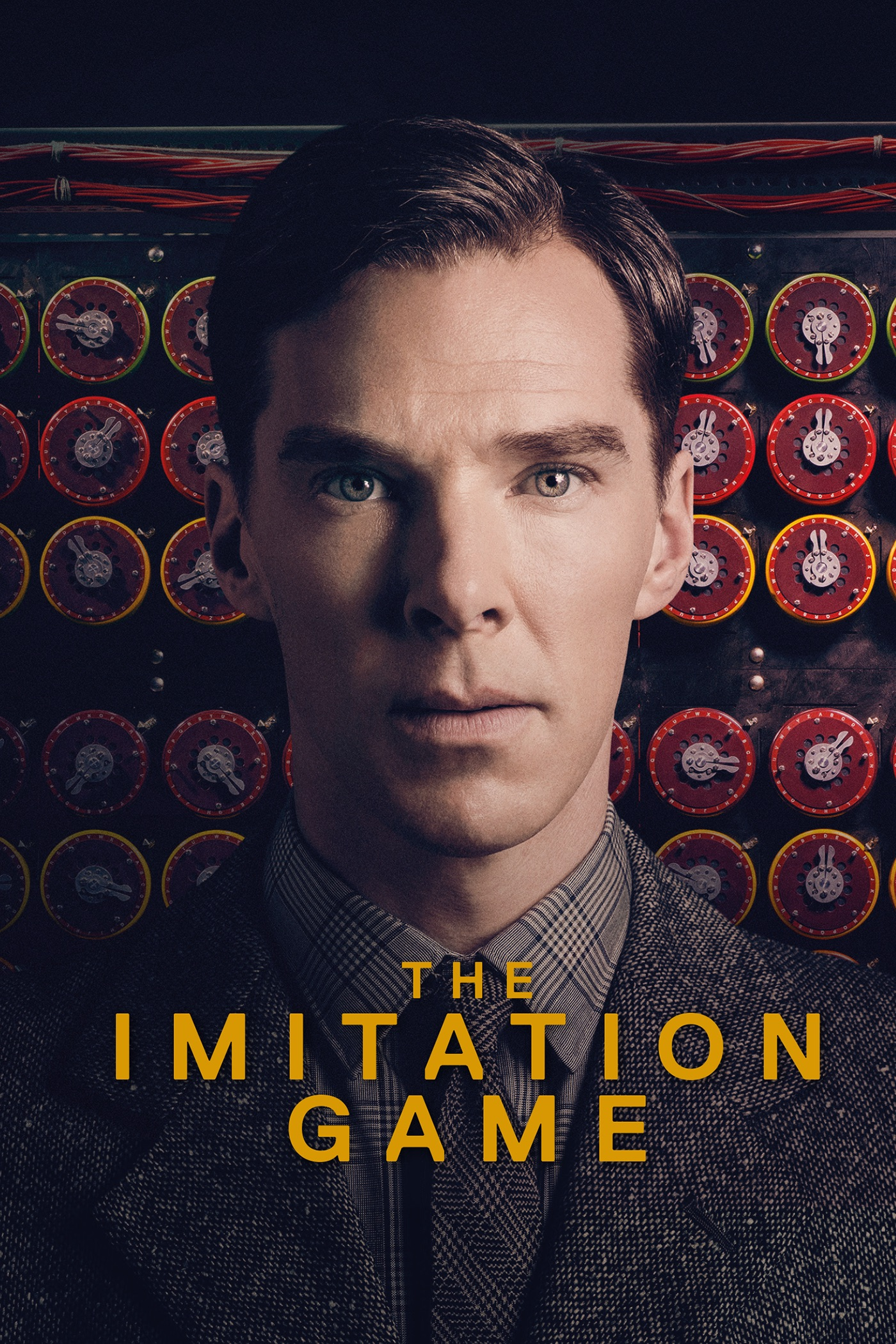
I watched this movie one year ago during the national holiday. Although it was assigned as a selective task from the course “General Introduction to Computing” at first, I never got even a little bit sense of tiredness during the whole movie.
Living in a world sorrounded by electronic devices, I almost forget how people lived without them, and I bet a huge part of this convenience is credited to the father of computers Turing. Most of the time, the story begins with the pride and dumb expression of Turing. As a talented young man, he was addicted to puzzles, and luckily one of them was what the UK was confronted wtih during the World War II. They needed to figure out the confidential information encoded as “random” characters in the enermies’ deliveries. For people without the code instructions, there’s too many possible coding methods and far more than arduous for human brains to check them one by one. In contrast to other mathematicians’ case-by-case workflow, Turing was determined to invent a machine to calculate this result automatially, which means solving this tough problem once and for all.
It is known to all that coming up with something from scratch is one of the hardest tasks in the world. Teased and abused by his coworkers, he struggled to finish his masterpiece ,Enigma, with the help of the only woman Joan on his team. Once the machine was finished, the UK side completely took the edge in the war and claimed victory soon after.
One of the most touching scenes in the film is a dilemma: At the first time they sucessfully decoded the massage, they could choose to save the ship that their relatives take from being boomed by Nazi, or to keep this secret for the broader plan that to deceive them the UK couldn’t understand their secret code. At last they choosed the latter one. Maybe it’s just a fictional plot, but it still makes me think more about it. Sometimes we have to sacrifice what we beloved to acheive some goals, and it’s a worthy trade at some point. But it’s also why we need to commemorate, to keep something in mind that someone or something didn’t expire in vain; we forge on at the expense of them.
I believe this comment is also applied to the life of Turing. As an unsung hero during the war, he had to keep his masterpiece in secret, thus the public showed little respect to him when he was charged of his “unique sexual orientation”. To avoid prison, Turing underwent chemical treatment that damaged his brain and nervous system, leaving him to die in a tragic predicament in the prime of his life.” Many years later, the Queen published his credits and proved his innocence, but what a pity Turing would never see today’s digital world inspired by his prototype.
As an undergraduate who studies mathematics and physics, I always look down on the engineering students who waste all their time “fine-tuning the silly parameters and stared at the screen all day long for nothing”, but I never thought of Turing as this kind of engineers. He invented something with his clever mind and diligent hands; he created a model for solving problems. Maybe my intuition is wrong, our world is built from the “meaningless” fine-tuning job and that’s how we approach a brand new problem rather than sitting there building one’s own imaginary kingdom.
Another question that brings me deep thought is the one Turing was asked in the movie: What’s the difference between computers (the electronic brains) and the human brains? I’m mostly agreed to Turing’s answer: Humans can feel something but computers can’t. We are pleased when we encounter someone who can read and help us; we are puzzled when someone around us always hinder us from doing the right thing; we can get satisfaction from jogging; we can be depressed when we are charged of a crime we did’t commit. We don’t know what leads to it, but we can feel it; machines also don’t know why, thus they can only imitate it. So maybe that’s also another meaning of the “Imitation game”: we can use computers to imitate the game, but it’s us who are really enjoying this Earth’s online game. We never know when this game will end, so we must live every day to the fullest.
This blog cost me two days to finish, due to the painful neck caused by sitting in front of the computer all day long… And thanks to Turing, I can work at any time I want. That’s all for today. Have a nice day everyone!
- AI’s version:
The Imitation Game: Reflections on Turing’s Legacy
As Saturday arrives, I find myself reflecting on something that has been stirring within me recently. The theme of today’s writing is inspired by the film The Imitation Game, which delves into the life of Alan Turing, one of the most celebrated figures in the history of computer science.
I first watched this movie a year ago, during the national holiday. Initially assigned as a task for my “General Introduction to Computing” course, I quickly realized that it was no ordinary assignment. Not once did I feel even a hint of fatigue throughout the entire movie.
Living in a world surrounded by electronic devices, I often forget how life was before their existence. I believe a significant part of the convenience we enjoy today is due to the genius of Turing, the father of modern computers. The movie portrays Turing, at first glance, as a somewhat aloof and socially awkward figure, a talented young man consumed by his obsession with puzzles. Luckily, one of these puzzles turned out to be something the UK desperately needed to solve during World War II: the enigma of Nazi codebreaking. The enemy’s messages were encoded as seemingly random characters, and without the right instructions, deciphering them was an insurmountable challenge. The possible combinations were simply too vast for the human brain to check manually.
Unlike other mathematicians who focused on solving individual cases one by one, Turing was determined to create a machine that could automate the process, solving this monumental problem once and for all. His vision would later lay the foundation for the computers we rely on today.
It’s widely acknowledged that inventing something from scratch is one of the hardest endeavors in the world. Turing faced ridicule and isolation from his colleagues, but with the help of the only woman on his team, Joan, he persevered and brought his masterpiece—Enigma—to life. Once the machine was operational, the UK gained the upper hand in the war, leading to victory.
One of the most poignant moments in the film comes when the team is faced with a difficult decision: they have successfully decoded a message and could choose to save a ship carrying their relatives, which is about to be destroyed by the Nazis. However, they decide to keep the secret of their codebreaking intact for the sake of a greater strategic deception. Perhaps this is a fictionalized element, but it resonated deeply with me. Sometimes, we must sacrifice what we hold dear in order to achieve something greater. It is a difficult but necessary trade-off. It is also why we commemorate—so that the sacrifices made are not forgotten, and that the legacy of those who have given their lives for a cause is honored.
Turing’s life itself reflects this notion of sacrifice. As a hero of the war, he had to keep his achievements secret. Despite his monumental contributions, society showed little respect for him when he was later persecuted for his “unique sexual orientation.” The brilliant scientist died in silence, at the peak of his life, battling depression. Years later, the Queen posthumously acknowledged his contributions and exonerated him, but it is a tragic irony that Turing never saw the digital world he helped bring into existence.
As an undergraduate studying mathematics and physics, I used to look down on engineering students who seemed to waste their time “fine-tuning parameters and staring at screens.” But I now see that Turing was not just any engineer. He didn’t merely create a machine; he created a model for problem-solving. Perhaps my initial intuition was wrong: our world is, in fact, built on these “meaningless” fine-tuning tasks, which, when done right, lead to groundbreaking discoveries. Rather than sitting idle in our imaginary kingdoms, it is through this meticulous, iterative process that we approach solutions to the world’s toughest problems.
Another thought-provoking question posed to Turing in the movie stuck with me: What is the difference between computers (the electronic brains) and human brains? I mostly agree with Turing’s answer: humans can feel, but computers cannot. We experience joy when we find someone who can understand and help us; we feel frustration when someone stands in our way; we gain satisfaction from a jog or a workout; we become depressed when accused of something we didn’t do. We don’t always understand why we feel these emotions, but we feel them nonetheless. Machines, on the other hand, cannot truly “feel.” They can only mimic our behaviors. Perhaps this is the deeper meaning of the “Imitation Game”: computers can imitate the game, but it is we, the players, who truly experience it. The game of life may never have a clear endpoint, so we must live each day to its fullest.
As I finish this blog, I reflect on the two days it took to write—my neck sore from sitting in front of the computer for hours. And yet, thanks to Turing, I have the privilege of working whenever I choose. For that, I am grateful. That’s all for today. Wishing everyone a nice day ahead.