Notebook Entry
Reading notes for Modern Particle Physics, Mark Thomson (Chapter 2)
Chapter 2 Underlying Concepts
Units in particle physics
Natural units
Original thoughts:
Set $\hbar$ and $c$ to 1, which means all physical concepts are transferred into XX times of GeV, $\hbar$ and c. For example,
\[1\text m = \frac{\frac{1}{1.055\times 10 ^{-34}}\hbar{}\cdot \frac{1}{2.998\times 10^8}c}{\frac{1}{1.602\times 10^{-10}}\text {GeV}} = \frac{1}{0.197\times 10^{-15}}(\text{GeV}/\hbar c)^{-1} \to \frac{1}{0.197\times 10^{-15}}\text{GeV}^{-1} \text{(set $\hbar$, c to 1)}\]Heaviside-Lorentz Units
To simplify the units of electromagnetic problems (to simplify the units of charge!), we set $\varepsilon_0 = 1$(with $c= 1$, we have $\mu_0=1$), so
\[F= \frac{e^2}{4\pi r^2}\]Special Relativity
-
Lorentz Boost
-
Four-vectors
-
Mandelstam variables
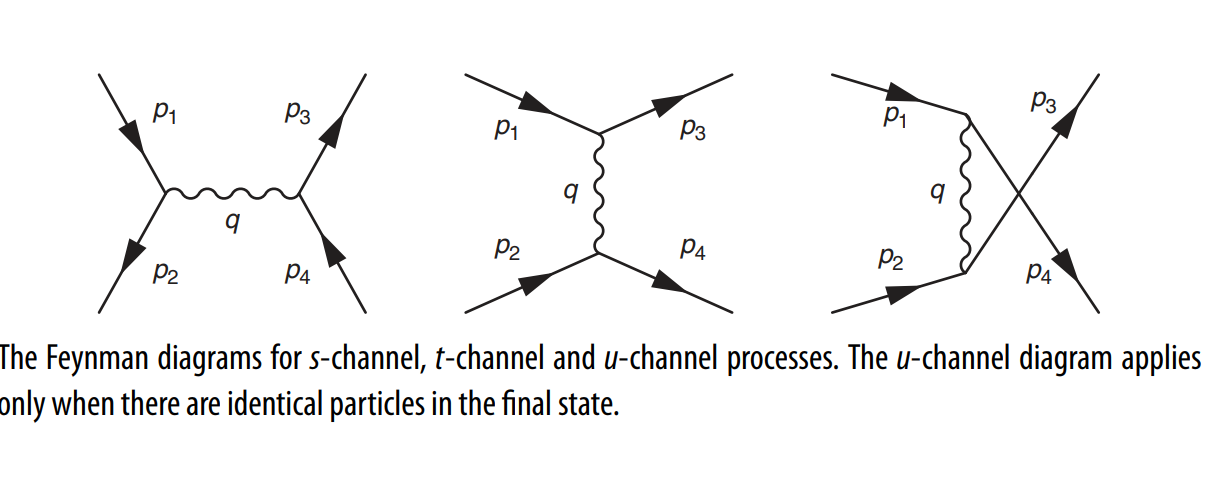
Figure 1: s-channel (ensemble to “annihilation”)
Figure 2: t-channel (ensemble to “scattering”)
\[\text{(invariable)}t = (p_1-p_3)^2 = (p_2-p_4)^2\]Figure 3: u-channel (ensemble to “scattering”, appears only when it comes to identical particles)
\[\text{(invariable)}u=(p_1-p_4)^2=(p_2-p_3)^2\]The property of 3 invariants above: \(s+t+u = m_1^2+m_2^2+m_3^2+m_4^2\) Proof: \(\begin{aligned} \text{LHS} &= (p_1+p_2)^2+(p_1-p_3)^2+(p_1-p_4)^2\\ &=p_1^2+p_2^2+p_3^2+p_4^2+2p_1\cdotp p_2 -2p_1(p_3+p_4)+2p_1^2\\ &=p_1^2+p_2^2+p_3^2+p_4^2+2p_1\cdotp p_2 -2p_1(p_1+p_2)+2p_1^2\\ &=p_1^2+p_2^2+p_3^2+p_4^2\\ &=m_1^2+m_2^2+m_3^2+m_4^2\\ &=\text{RHS} \end{aligned}\) Q.E.D.
Non-realistic Quantum Mechanics
-
5 postulates for quantum mechanics
-
Position-momentum uncertainty principle
-
Angular momentum
-
Fermi’s Golden Rule (for perturbation Hamiltonian)